

Kundalini Tantra Yoga is a spiritual discipline that focuses on awakening and directing kundalini, which is described as a the dormant and latent life force coiling at the base of the spine. Its purpose is spiritual evolution, expanded consciousness, and liberation. It is not a physical object or merely a sexual energy. It is considered the total life force energy in its unawakened state.
Tantra is a vehicle for transcendence that works with breath, sound, visualisation, subtle energy channels (nadis), Chakras and sometimes rituals. If you are beginning your journey, this guide provides an foundational overview of Kundalini energy, Tantra philosophy, and the symbolic Chakra system.
Note: As these practices involve intensive breathing and energetic focus, beginners are encouraged to practice under the guidance of a qualified Yoga teacher.
What is Kundalini Energy?
Kundal means loops, and Kundalini means coiled like a serpent. According to the Hatha Yoga Pradipika and the Siva Samhita, the dormant spiritual energy coiled three and a half times at the base of the spine, symbolised by the coiled serpent, is Kundalini. The energy is awakened to liberate and expand spiritual knowledge through different yogic and tantric activities. In Tantra Yoga tradition, Kundalini is viewed as the upward transmission of consciousness through the subtle energy channels that correspond with the human nervous system, moving through the different Chakras along the spine.
According to Indian mythology and classical texts, including Hatha Yoga Pradipika, Shiva Samhita and Sat-Chakra-Nirupana, Kundalini is the power of Shakti coiled around the spine at Muladhara Chakra, which rises with awareness as a symbolic form of Shiva at the Crown Chakra. It is the raw potential that gets aligned with higher consciousness and awareness.
Guide to the Traditional Seven-Chakra Model
In Kundalini Tantra Yoga, the practitioner works with a system of seven primary energy centers known as Chakras. Each represents different facets of the human experience:
- Muladhara – Root (survival, stability)
- Svadhisthana – Sacral (creativity, emotions)
- Manipura – Solar plexus (power, will)
- Anahata – Heart (love, compassion)
- Vishuddha – Throat (expression)
- Ajna – Third eye (intuition)
- Sahasrara – Crown (transcendence)
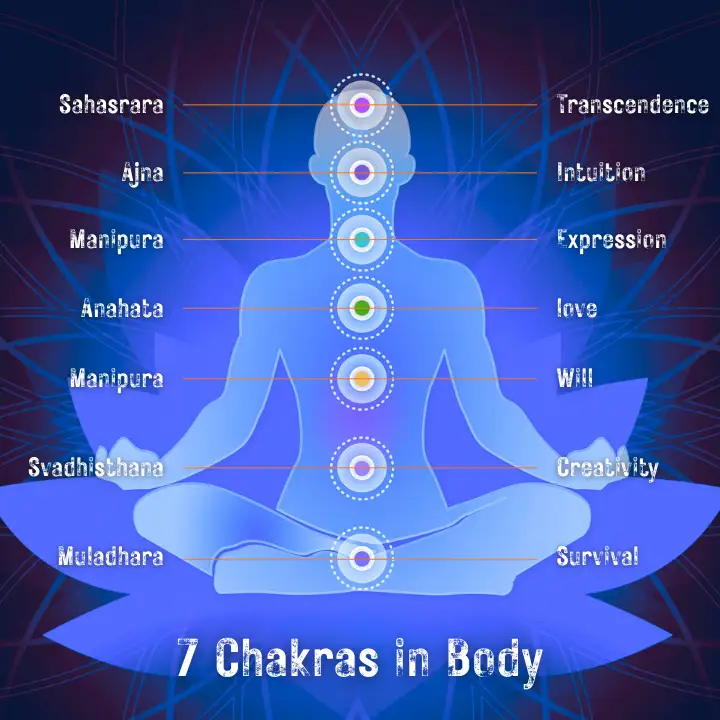
Kundalini energy rises through seven chakras, starting from Muladhara Chakra, its origin, to the Crown Chakra, and five chakras in between, symbolising different aspects and emotions of human character. The central objective of Kundalini Tantra Yoga is to progressively balance these energy centers to facilitate a state of higher awareness and spiritual clarity. This is described in classical texts as enlightenment, a state of profound awareness and self-realization.
How is Kundalini Tantra Yoga different from regular Kundalini Yoga and other practices like Hatha Yoga?
Kundalini Yoga is the original and traditional path rooted in Tantra, with the core idea that the universe is made of Shiva (consciousness) and Shakti (energy). Kundalini is Shakti within you. Its goal is union and merging energy with awareness, involving different activities like following symbolic rituals, chanting Mantras, using sacred Yantras and initiation of the Guru.
Kundalini Yoga focuses on suppressed desires and guilt, working to transform primal energy. It integrates human’s shadow aspects like anger, lust, jealousy, ambition, fear and guilt and uses these elements as a spiritual fuel for following the rituals to release the emotions blocking our Chakras consistently under the proper guidance. Note: This spiritual process is complementary to, and not a replacement for, professional mental health support.
Kundalini Tantra Yoga is centered not on suppression, but on the process of releasing emotions and the traditional goal of liberating the soul. In contrast, the modern system of Kundalini Yoga, popularized in the 1960s, is designed as a practice to awaken energy intentionally. This approach includes specific kriyas, techniques of intense breathwork (such as Breath of Fire), chanting mantras, and long meditations which is often characterized by the use of white clothing and head coverings. Practitioners are encouraged to approach these intense breathing techniques mindfully and under the guidance of an experienced instructor.
On the other hand, the Hatha Yoga is the traditional yoga style from the classical textbooks. The word Hatha refers to two important elements of the universe. Ha means sun and Tha stands for moon. It represents philosophical balance opposing energies in the body. The core purpose of Hatha Yoga is to purify and prepare the body and the nervous system for deep meditation.
This involves the practice of breath control using the Pranayam technique while sitting in different Asanas (postures), opening of Bandhas (energy locks) following different mudras and cleansing techniques. While these were originally intended as preparation for higher states of consciousness, many modern yoga studios focus primarily on Hatha as a physical fitness routine. Within the spiritual path, Hatha Yoga is often considered the foundational step for awakening consciousness. Because it emphasizes a steady, gradual progression, it is generally viewed as a more accessible entry point for beginners compared to the more intensive energetic shifts of Kundalini Tantra Yoga.
| Feature | Kundalini Tantra Yoga | Modern Kundalini Yoga (1960s) | Hatha Yoga (Classical) |
| Origin & Lineage | Ancient Tantric texts; traditionally passed from Guru to disciple. | Popularized by Yogi Bhajan/3HO; modern energetic sets. | Classical textbooks (Hatha Yoga Pradipika). |
| Core Philosophy | Union of Shiva (Consciousness) and Shakti (Energy). | Awakening “Kundalini” energy through structured Kriyas. | Balancing Sun (Ha) and Moon (Tha) energies. |
| Primary Goal | Spiritual evolution and liberation (Moksha). | Intentional energy awakening and mental clarity. | Purifying the body to prepare for deep meditation. |
| Common Practices | Rituals, Yantras, Mantras, and subtle energy work. | Kriyas, intense “Breath of Fire,” and white attire. | Asanas (postures), Pranayama, and Bandhas. |
| Approach to Emotions | Integrating and transforming “shadow” emotions (anger, fear). | Releasing blocks through vigorous physical/vocal sets. | Balancing the physical and energetic body. |
| Pace & Safety | High Intensity: Best practiced under direct expert guidance. | Active Intensity: Requires mindful approach to breathwork. | Steady Progression: Foundational and accessible for all levels. |
What Happens During a Kundalini Tantra Yoga Class?
The first step of Kundalini Tantra Yoga is to fasten and then control the breath, which increases the supply of oxygen in our body and activates the sympathetic nervous system. The next step after controlling the breath is holding arms for a few minutes and creating muscular fatigue. It builds mental endurance and forces emotions to be released consciously, creating discomfort, which makes people feel light and relaxed afterwards.
Kundalini Tantra Yoga includes the usage of different mantras which are repeated in the same sound pattern while regulating the breath, reducing mental chatter and enhancing focus. Within the Tantric tradition, chanting is believed to influence the practitioner’s mental state and harmonize the subtle nervous system, which may help improve intuition and clear Chakra blockages.
While the practice builds mental endurance, the process of consciously acknowledging emotional discomfort can leave practitioners feeling “lighter” and more relaxed afterward. Note: Because these techniques can be physically and emotionally intensive, it is important to practice under the guidance of a qualified yoga teacher, especially for those with pre-existing heart or mental health conditions.
Why Setting Boundaries Is Part of This Practice?
Kundalini Tantra Yoga is an advanced practice and is generally not recommended for absolute beginners without proper preparation and guidance of a qualified yoga teacher. There are some boundaries which need to be set while using this style. Let us know why? Because this style deals with intense psycho-energetic processes and works with deep-seated subconscious patterns, setting clear boundaries is essential for a safe experience.
1. Works Directly With Raw Energy
This system of yoga uses the raw and powerful energy dormant in us. It activates deep breath work bandhan’s and visualisation and can overstimulate the nervous system. If boundaries are not set, it can cause anxiety, insomnia and flooding of emotions.
2. Mental health protection
Tantric practices can unlock suppressed trauma. If someone has anxiety, depression, or unresolved trauma, intense practices without guidance can destabilise them. Clear limits on duration, teacher credibility, and pacing prevent harm. Spiritual growth should expand you, not fracture you.
3. Ethical boundaries
Tantra is often misunderstood and misused. It can blur lines between teacher and students because it involves energy, intimacy and vulnerability. Here, a Guru can’t ask for secrecy or supremacy. That is why boundaries provide consent, emotional safety, power dynamics and physical autonomy.
4. Physical safety
While practising this style of yoga, breathing turns stronger, and the bandhans are opened, which may elevate blood pressure and heart rate. For individuals with pre-existing cardiovascular conditions, these physiological shifts can be dangerous, potentially leading to cardiac stress or severe distress. Without expert guidance, overstimulating the nervous system can cause significant emotional or psychological breakdown.
Can Kundalini Be Related to Sexual Energy?
Few people doubt whether Kundalini energy is the same as sexual energy and that Tantrik Kundalini Yoga is practised to stimulate the sexual productivity of a human. Kundalini is the primal force resting at the base of the spine. This reason is also associated with survival and reproduction, so sometimes people mix it up with the sexual energy, but to clarify the difference between both, one thing can be assured: sexual analysis is part of this system, but the Kundalini energy is the whole system. Kundalini energy is the total reservoir of that life force and power station, while sexual energy is one current.
Confusion often arises because both energies are associated with the Muladhara (Root) Chakra, which anatomically corresponds to the pelvic region and reproductive systems. The awakening of Kundalini and states of sexual arousal can share similar physiological markers, such as increased sensation and shifts in the endocrine system. From a neurological perspective, the nervous system processes intense stimulation through similar pathways, whether the context is spiritual or physical.
Many monks and celibates talk about their interconnectivity. While sexual energy can be expressed for physical pleasure, Kundalini represents the upward movement of energy toward expanded consciousness. In this framework, sexual energy may be a doorway, but Kundalini is the entire house.
Final Thoughts: Is This Path for You?
Kundalini Tantra Yoga is a profound discipline, but it is not a shortcut for professional therapy, personal discipline, or life responsibility. Instead, it acts as an amplifier of your internal state. Scientific research into contemplative practices suggests that techniques involving breathwork and focused meditation can significantly enhance attentional control and respiratory efficiency.
The practice is most effective when approached with a grounded mindset and a spirit of surrender. Engaging in these intensive techniques with motivations of ego or supremacy can lead to emotional imbalance or internal “chaos.”
In conclusion, Kundalini Tantra Yoga is a traditional path toward the awakening of energy and the realization of higher consciousness. However, this journey requires patience and consistency; in this ancient tradition, true transformation is a gradual process that cannot be achieved overnight.
Disclaimer: Always consult with a healthcare professional before starting a new intensive physical or spiritual practice, especially if you have a history of respiratory or psychological conditions.
Why you should choose Mahamukti Yoga Retreat in Bali?
At Mahamukti Yoga Retreat, yoga is not just a physical workout but a practice integrating body, mind, spirit, and breathwork. The teachings here are rooted in traditional wisdom while also being accessible. It doesn’t matter if you’re a newbie to yoga or a perfectionist; they help everybody. Talking about the atmosphere here, it’s calm yet very alive.
Mahamukti Yoga Retreat keeps you closer to nature and allows you to be you, not to pretend, not to rush anything or anywhere, not to compete, just be present. The place also gives importance to the philosophies of yoga that help their students to learn yoga on a deeper level. You can learn self-discovery, compassion, detachment, and conscious living while performing your daily practices here. The open space, fresh air, and lush green trees would help in making your every session feel more internally nourishing.
This Yoga Kendra isn’t about an escape from your life but learning about to live your daily life while being self-conscious and connected to yourself. This would teach you about what your purpose in life is, and you will establish a deeper connection with yourself.